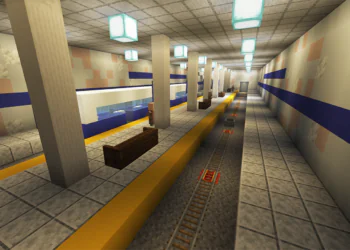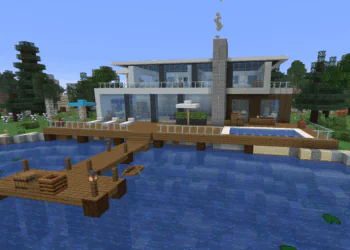
An underground base is any base built below the surface, either carved out of solid rock or built inside a cave that is already there. Dig your main floor somewhere between Y 0 and Y 40, light every room to at least light level 1, and almost no hostile mobs can spawn inside it.
An underground base is one of the most popular things to build in Minecraft. They are a great way to build a home, get hidden storage space, and add some challenge to the game. This guide covers how deep to dig, how much light each room actually needs, and 8 designs worth copying. Everything is current as of Minecraft Java 26.3 and Bedrock 26.50 (Wilderness Bound).
Getting Started with Underground Bases in Minecraft
It is usually more difficult to build an underground base in survival since you will typically need to dig out rooms and hallways. Regardless, there are some clever ways to make building underground easier like using existing cave networks, efficiency enchantments, beacon buffs, and even modpacks.
It’s your choice whether the entire base is underground or just a portion. For example, you could build a nice cottage house on the land with a ladder going down to a storage vault. Alternatively, you could build a hidden trapdoor in the forest going down to a mega base with storage, housing, a fancy nether portal, enchanting nook, and more.
How Deep Should You Build an Underground Base?
Depth is an important decision and it changes how long the build takes to complete. Here is what each y coordinate gets you:
| Depth | What you get | What to watch for |
|---|---|---|
| Y 50 to 60 | Fast to dig, short stairs to the surface, easy to add skylights | Almost no natural cover. Anyone walking past can find the entrance |
| Y 0 to 40 | The sweet spot for a first underground base. Plain stone, lots of cave connections, still a short walk home | You will break into open caves constantly and have to seal or light them |
| Y -1 to -30 | Deepslate walls, no surface noise, and close to the ore layers | Deepslate is roughly twice as slow to mine as stone |
| Y -31 to -52 | The deepest level worth living at, just above the best diamond layer | Deep dark biomes generate below Y 0. Dig into one and sculk shriekers can summon a warden |
| Y -53 and below | Nothing useful | Open cave pockets below Y -54 are filled with lava, and bedrock generates from Y -64 up to Y -60, so your floor turns patchy and unbuildable |
Stone starts turning to deepslate at Y 8 and is fully deepslate by Y 0. Plan for slower digging as soon as your staircase passes Y 8.
How Much Light Does an Underground Base Need?
Since the Caves and Cliffs update, hostile mobs in the overworld only spawn on a block with a light level of exactly 0. A single torch lights up much more space than most players expect, so you don’t need to put torches everywhere.
There is one exception worth knowing underground: slimes. Below Y 40, slimes can spawn in slime chunks at any light level. If slimes keep appearing in a room that is fully lit, you have built in a slime chunk. Cover the floor with bottom slabs (see below) or move the room.
That does not mean one light level fits every room. Different things underground want different brightness:
| What the room is for | Light level you need | Why |
|---|---|---|
| Any room you want mob free | 1 or higher | Overworld hostile mobs need block light 0 to spawn (slime chunks are the exception) |
| Wheat, carrots, potatoes, beetroot | 9 or higher | Crops stop growing below 9 and uproot if it gets very dark |
| A grass floor you want to spread | 9 or higher | Grass only spreads onto dirt when the grass block has light 9 or more above it. Grass you already placed stays green in the dark, as long as nothing solid covers it |
| Mushrooms planted on dirt | 12 or lower | Mushrooms pop off the block above light 12 |
| Mushrooms at any brightness | Any | Plant them on podzol, mycelium, or nylium instead |
A soul torch is the best for an underground mushroom room. It emits light level 10, which is bright enough to stop every mob and still dark enough for mushrooms to spread. A regular torch at 14 is too bright right next to it, so any mushroom within a block of a regular torch will pop off.
Light drops by one level for every block of distance. A torch on the floor keeps the light above 0 for 13 blocks in a straight line, so one torch every 20 blocks keeps a straight corridor safe with room to spare. Light has to go around corners block by block, so it runs out faster there, and corners need their own torch.
No single light source can bring a full 9×9 crop field up to light level 9 at the corners, not even a lantern or glowstone at maximum brightness. The corners are 8 blocks away from the center and you would need a light emitting 17. Put a torch at each of the four corners of the field and hang one lantern a block above the center water, and every farmland block is covered.
8 Underground Base Designs
Here are our top picks for the best underground bases for Minecraft:
1. Basic Underground Base
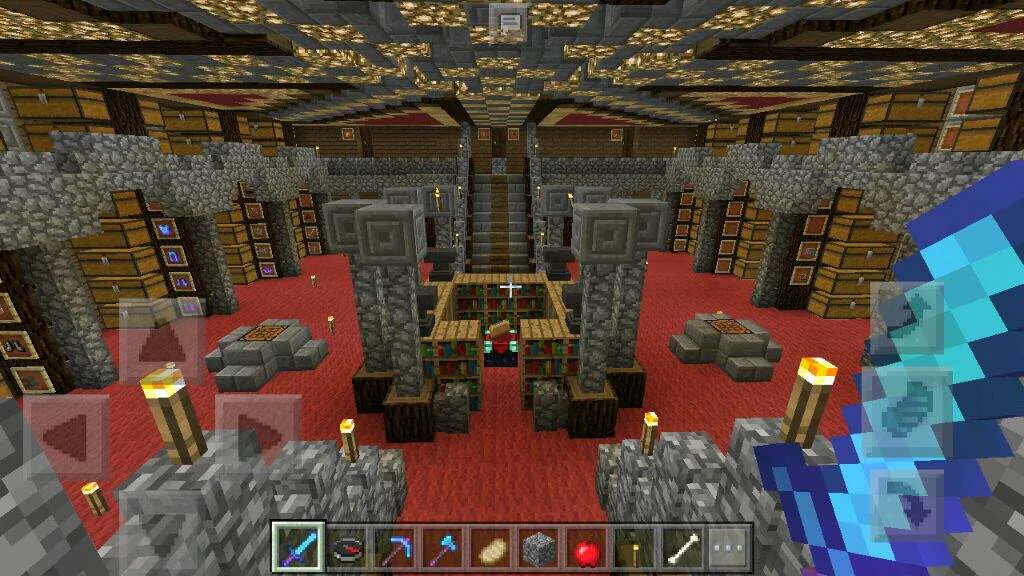
This design has a dual function of being an organized storage room with a convenient enchanting area in the middle. It would be easy to apply enchants to your equipment when you’ve got all your supplies within reach.
Note the large amount of glowstone and torches used in this base. That is more light than you need to stop spawns, but it is the right call for a room this size, because a single dark block behind a chest is all a creeper needs.
2. Large Cave Village
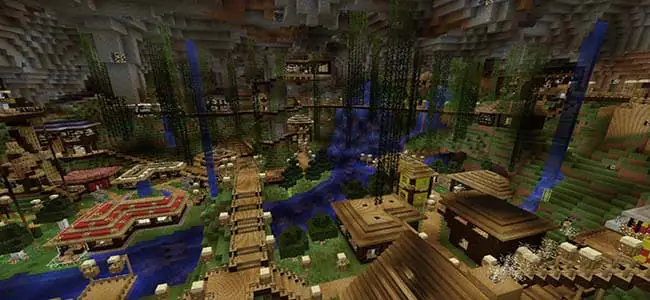
A great way to remove the hassle of building underground is to use a naturally generated cave network. Just imagine how much time you would save by not having to dig out a massive building space.
This particular design includes lots of grass, trees, water, and vines to give a lively above ground feeling while still being underground. One idea could be to build a garden with a gazebo, flowers, and benches. Keep the light level at 9 or higher wherever you want the grass to spread onto new dirt, and at 9 or higher over any saplings, since trees need that much light to grow.
3. Semi-Underground Base
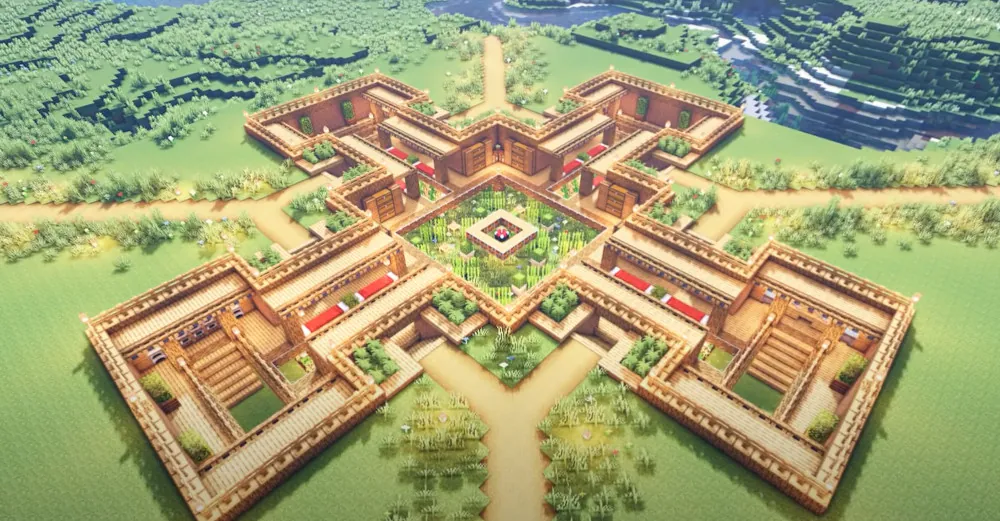
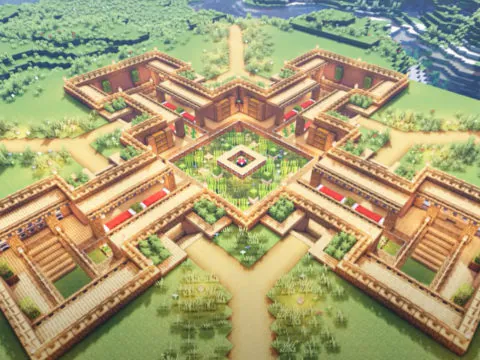
A unique take on underground bases, this build is below the ground but is not covered in dirt or stone. It remains completely open to the land above it, except for some glass.
A cool addition could be to add a beacon right in the square in the middle. This would provide beneficial buffs like increased movement speed while running around the base. Another idea could be to build a library to do your enchanting.
4. Secret Base
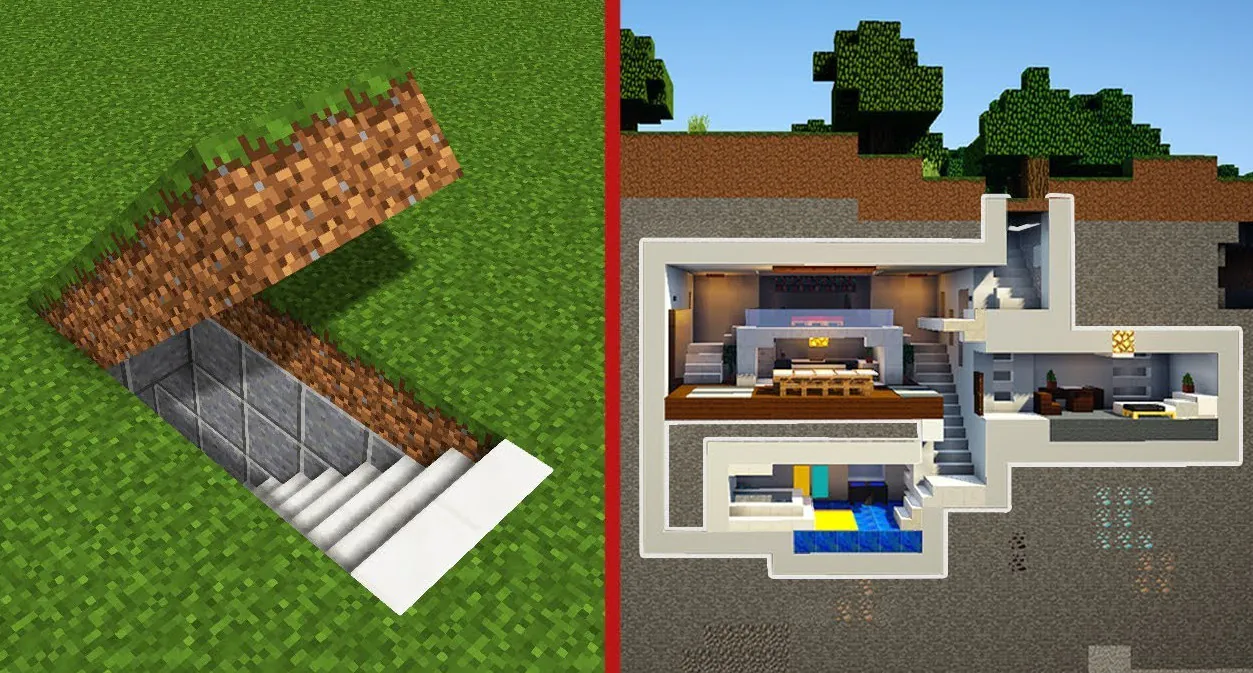
Have you ever dreamed of having a totally hidden house in your Minecraft world? Why not build a hidden staircase in the grass which goes down to your living space.
There’s plenty of things you could add to this kind of underground base design, including a kitchen area, storage room, or even a mob grinder.
5. Tiny Underground Base
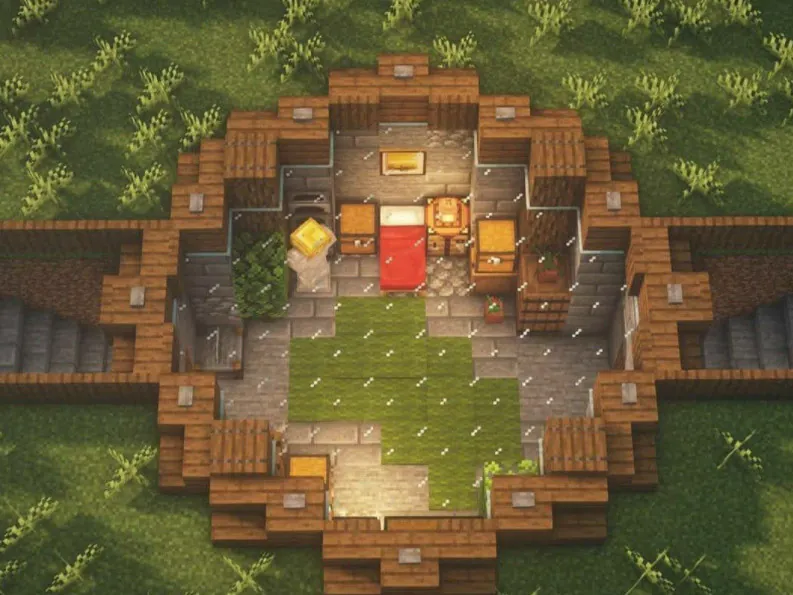
If you want a simple Minecraft house that’s protected underground, this is the design for you. This base features a fairly small room built underground with a glass roof for natural sunlight. Mobs cannot spawn on glass, so the roof itself is safe, but watch for monsters walking across it at night.
If you like this design but don’t want to use it as a house, try making a greenhouse and use the space to grow food.
6. Underground Room
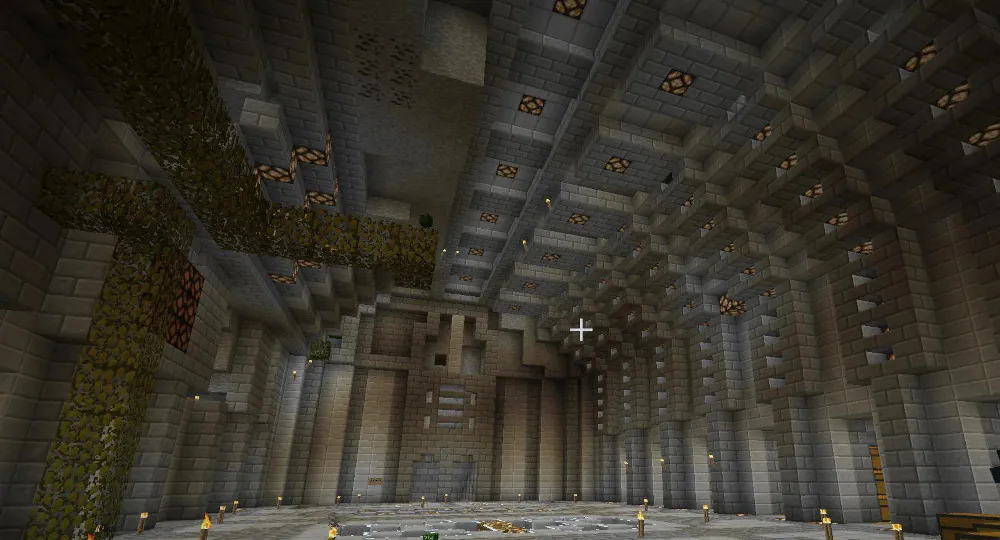
In this work-in-progress underground room, there’s a great design starting. This large room would be great as a hallway, throne room, or grand entrance and could be a starting point for a bigger base. If using the room as a hallway, building some statues would be a great idea.
If you like Minecraft mods, this type of room design would go great with the Stoneblock 2 modpack.
7. Minecraft Cave Base
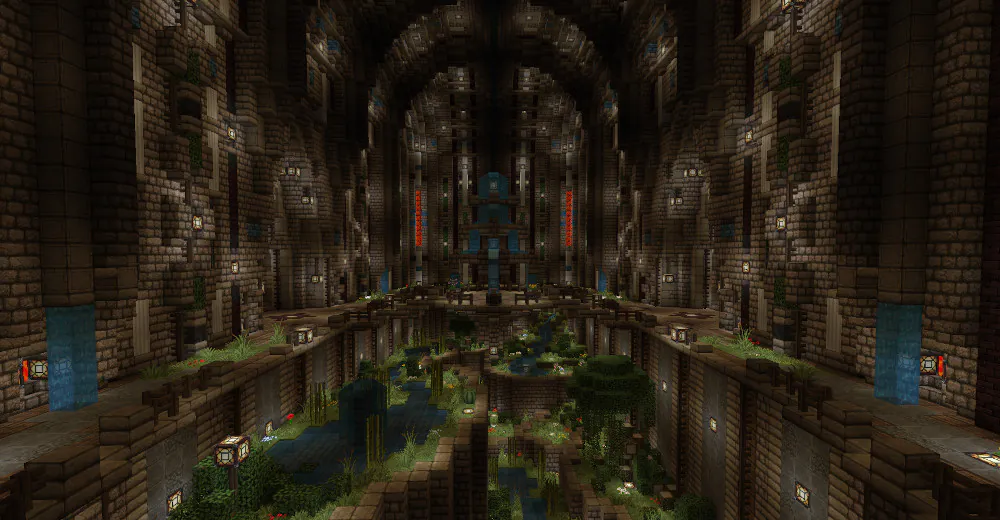
In this impressive underground cave base, there are stone brick walls, water features, gardens, and walkways. Note that larger builds like this often struggle with lighting and tend to be darker in general. Something like this would be a ton of work on survival mode, it may be better suited to creative unless you want a challenge.
An addition to this design could be to build a fountain somewhere. It could even be lit up with glowstone or lamps.
8. Simple Underground Base
It’s clear that a lot of thought went into the design of this base. The base includes a small farm, a bedroom, storage space, and an entry hall. This is an underground base that pretty much anyone can build in survival Minecraft.
How to Spawn-Proof Without Lighting Everything
Sometimes you want a room to stay dark. A dungeon corridor lit with candles, a mushroom cellar, a deep dark themed hallway. You can still block every spawn without adding a single torch, because mobs also need a full, solid block to stand on.
These surfaces cannot spawn a mob at any light level:
- Bottom slabs. The cheapest way to seal a large floor, and they stop slimes in slime chunks too. Top slabs and double slabs do not work, since both count as full height. Wilderness Bound added wool and concrete slabs, so you can now slab a floor in any of 16 colors, and wool slabs muffle vibrations the same way wool does, which keeps sculk sensors near a deep dark base quiet
- Carpet. Blocks the space the mob would occupy, and you get a colour choice out of it
- Glass, tinted glass, and leaves. Tinted glass is the useful one, since it blocks light completely and still refuses spawns
- Dirt path and farmland. Both sit at 15/16 of a block, which is short enough to count
- Snow layers 2 to 7 blocks thick. A single layer does not work, and neither does a full stack of 8
- Buttons, levers, pressure plates, and rails. A stone button on a stone floor is easy to miss, which makes buttons the go-to for keeping a natural cave looking untouched
Mud, soul sand, and full 8-layer snow all look like partial blocks and all allow spawning anyway, so do not rely on them.
On Bedrock, an upside-down stair blocks spawning. On Java, it counts as a solid top surface and mobs will happily spawn on it. If you build a stepped ceiling or an inverted stair trim on Java, make sure you light it.
One more thing worth knowing on a survival world: lighting your own base does not stop the caves around it. Mobs spawn 24 blocks or more away from you, and every unlit cave next to your build keeps producing them and filling the hostile mob cap. If your base feels busy despite being fully lit, the problem is almost always a cave system you have not sealed off yet.
Which Cave Biome Should You Build In?
If you are using a natural cave rather than digging from scratch, the biome you land in decides most of your palette and a fair bit of your safety.
| Cave biome | Good for | Trade-off |
|---|---|---|
| Ordinary caves | Space, ore access, easy to reshape | Plain stone and deepslate, so you supply all the character yourself |
| Lush caves | Green builds with a real ceiling. Glow berries light it for free | Water everywhere, and it floods a room the moment you dig wrong |
| Dripstone caves | Dramatic vertical shapes and a ready-made menacing look | Falling stalactites do serious damage. Clear the ceiling before you build under it |
| Sulfur caves | Yellow sulfur and deep red cinnabar, both with full stair, slab, wall, and brick sets | Ore rarely generates here, the pools give you nausea, and geysers launch you into the air |
| Deep dark | Nothing. Loot it and leave | Sculk shriekers summon a warden. Not a place to live |
Sulfur caves were added with the Chaos Cubed drop in June 2026, and they are one of the best-looking cave biomes to build in right now. Sulfur and cinnabar replace most of the stone and deepslate down there, so ores rarely generate, and you should not pick one as a base if you wanted to strip mine from your front door. The pools hold potent sulfur, which releases a noxious gas across the surface of the water. Standing in gas-affected water gives you nausea for 4 seconds, renewed the whole time you stay in it. Where potent sulfur sits above a magma block, the pool becomes a geyser that erupts about every 50 seconds and throws anything standing over it upward. Bridge over the pools or drain them before you build, and keep a bucket of milk handy to clear the nausea.
Frequently Asked Questions
Is an underground base actually safer than a house on the surface?
Yes, for one specific reason: there is no night. A surface house is surrounded by fresh spawns every evening no matter how well lit it is, while a sealed underground base only has to deal with the caves you have not closed off. The trade-off is that when something does get in, it is already inside with you and there is nowhere to run.
How do you get back to the surface quickly from a deep base?
A bubble column elevator is the fastest and cheapest option. Build a shaft two blocks wide and fill both columns with water source blocks, all the way up. Put soul sand at the bottom of one column to push you up, and a magma block at the bottom of the other to pull you down. If the water in the shaft keeps flowing instead of staying as source blocks, plant kelp up the column and then break it, which turns the water into source blocks. From Y -50 that is far faster than a long ladder climb.
What do you do if you dig into lava or water?
For lava, place any block directly into the source you exposed and it is over. Never mine the block directly under your feet in the deepslate layer, since that is how most lava deaths happen. For water, block the hole the same way and it stops flowing. A single bucket of water in your hotbar also doubles as a fall save and a lava shield.
Can you build an underground base in the nether?
You can, but light will not protect it. Several nether mobs, including piglins, zombified piglins, ghasts, and magma cubes, spawn no matter how bright it is, so torches do little for you there. Spawn-proof with blocks instead: bottom slabs across every floor, and walls that can’t burn, like stone-type blocks or crimson and warped wood, since ghast fireballs set fire to anything flammable.