Crafting concrete in Minecraft has two steps: craft concrete powder from 4 sand, 4 gravel, and 1 dye, then place the powder next to water to turn it into solid concrete. Concrete comes in 16 colors, and you must mine it with a pickaxe or the block is lost. Since the Wilderness Bound drop, you can also turn it into concrete stairs and slabs.
This guide is current for 2026 (Minecraft Java 26.3 and Bedrock 26.50, Wilderness Bound).
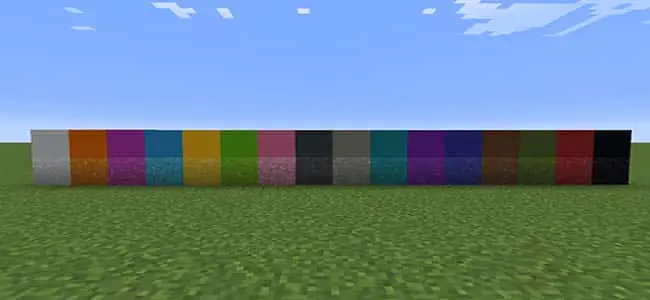
Concrete is one of the best building blocks in the game. It comes in the same 16 colors as wool but with a smooth texture that works well with modern exteriors, statues, and pixel art. This guide covers the full process to crafting concrete, plus every dye and how to get them.
How Do You Make Concrete Powder?
Place 4 sand, 4 gravel, and 1 dye in a crafting table, in any arrangement, and 8 concrete powder blocks are made in the dye’s color.
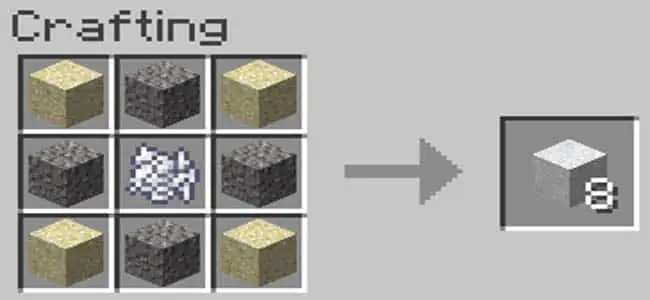
Two small things are worth knowing: regular sand works but red sand does not, and there’s no undyed concrete, so the recipe always needs a dye.
How Do You Turn Concrete Powder Into Concrete?
Place the powder touching water (any side) and it instantly hardens into concrete. Mine it back up with a pickaxe, ideally an efficiency-enchanted one if you’re moving a lot of blocks.
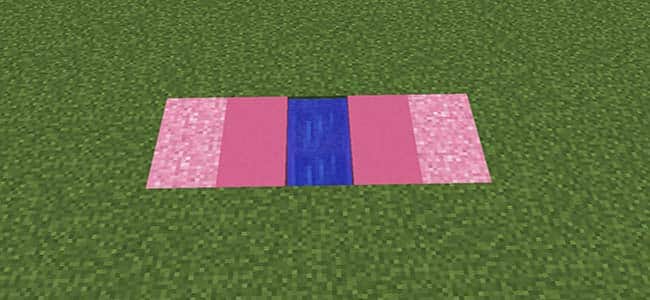
Powder has gravity just like sand and gravel so it falls to the ground. One important warning is to always mine finished concrete with a pickaxe. The block drops nothing if you break it with your hands or other tools.
How Do You Make Concrete Stairs and Slabs?
Concrete stairs and slabs were added in the Wilderness Bound drop, in all 16 colors. They use the same recipes as stone stairs and slabs, and every block in the recipe has to be the same color:
| Block | Crafting table | Stonecutter |
|---|---|---|
| Concrete stairs | 6 concrete in a staircase shape makes 4 stairs | 1 concrete makes 1 stair |
| Concrete slabs | 3 concrete in a row makes 6 slabs | 1 concrete makes 2 slabs |
The stonecutter is the better deal for stairs, since you get one stair per block instead of four for every six. You need finished concrete for both, because concrete powder has no stair or slab version. Just like full concrete, the stairs and slabs drop nothing unless you mine them with a pickaxe.
The Fast Way to Mass-Produce Concrete
Powder falls like sand, and it hardens the moment it lands next to water. The fastest setup uses both of those. Run a line of water along the floor, then stack a tall column of powder directly above a block space that touches the water. The bottom block hardens right away. Mine it, the next block drops into its spot and hardens too, and you keep mining until the whole column is concrete in your inventory. Pair that with an efficiency pickaxe and you can produce hundreds of blocks an hour for a big build. Some players go further with pistons, but the column method usually works fine.
Concrete vs Concrete Powder
| Concrete Powder | Concrete | |
|---|---|---|
| Gravity | Falls like sand and gravel | Solid, stays in place |
| Texture | Grainy, speckled look | Smooth, bold color |
| How you get it | Crafted from sand, gravel, and dye | Powder touching water |
| Stairs and slabs | None | Yes, in all 16 colors |
| Best tool | Shovel | Pickaxe (or the block is lost) |
Most builders treat powder as a step toward concrete, but the grainy texture can be nice on its own for sandy paths.
All 16 Dye Colors and Where to Get Them
| Color | Source |
|---|---|
| White | Bone meal or lily of the valley |
| Light Gray | Azure bluets, oxeye daisies, white tulips, or white + gray dye |
| Gray | Closed eyeblossoms, or black dye + white dye |
| Black | Ink sacs (from squids) or wither roses |
| Brown | Cocoa beans (jungle biomes) |
| Red | Poppies, red tulips, rose bushes, or beetroots |
| Orange | Orange tulips, torchflowers, open eyeblossoms, or red + yellow dye |
| Yellow | Dandelions, sunflowers, or wildflowers |
| Lime | Green + white dye, or smelting sea pickles |
| Green | Smelting cactus in a furnace |
| Cyan | Pitcher plants, or blue dye + green dye |
| Light Blue | Blue orchids or blue + white dye |
| Blue | Lapis lazuli or cornflowers |
| Purple | Blue dye + red dye |
| Magenta | Lilacs, alliums, or purple + pink dye |
| Pink | Peonies, pink tulips, pink petals, cactus flowers, or red + white dye |
Read more: House designs that put all this concrete to work
Frequently Asked Questions
Can you smelt concrete powder into concrete?
No. A furnace does nothing to it. Water contact is the only way, either placed beside water or dropped into it.
Does rain turn concrete powder into concrete?
No. Rain has no effect on concrete powder, so you can safely store it outside. It only hardens when it touches an actual water block.
Can you change the color of concrete after it is made?
No. Once concrete powder is crafted, its color is locked in, and the same goes for finished concrete. To get a different color, you have to craft new powder with a different dye.
Is concrete good for creeper-proof walls?
Not really. Concrete breaks much more easily in explosions than stone, so a creeper can blow a hole right through a concrete wall. For walls that need to hold up, use stone bricks or a similar stone block and save concrete for the parts people will see.
That’s all our information on concrete! What color are you using in your current build? Leave a comment below!